
Poland and its road towards membership in the European Union

When did Poland join the European Union?

At midnight on 1 May 2004, Poland became a member of the European Union. The accession, the legal basis for Poland’s membership in the EU, took place by virtue of the Accession Treaty signed on 16 April 2003 in Athens, Greece, and was the result of long-term efforts and actions of many governments.

Stages of Poland's integration with the European Union

The process of Poland’s integration began in Athens on April 8 1994, when Poland applied for membership in the European Union. The Polish application was confirmed by all member states at a conference in Essen on December 9-10, 1994.

The Accession Treaty was subject to approval and adoption by an absolute majority of votes by the European Parliament (9 April 2003) and unanimously by the Council of the European Union (14 April 2003).

European Union flag

The next stage was its ratification by all member states in accordance with the constitutional requirements applicable in each country (except Ireland). The Treaty entered into force after the end of the EU ratification procedure. In Poland, the process of its adoption took the form of a nationwide referendum on June 7-8, 2003. Polish citizens answered the following question: ‘Do you agree to the accession of the Republic of Poland to the European Union?’

According to the official results of the National Electoral Commission (PKW), 58.85% of those eligible to vote (i.e. 17,586,215 people) out of 29,868,474 went to the polls, 77.45% of them (i.e. 13,516,612) answered ‘yes’ to the question posed. 22.55% of them (i.e. 3,936,012) answered ‘no’. There were also 126,194 invalid votes cast.

Which countries joined the European Union in 2004?

Along with Poland, the following countries also joined the European Union in May 2004: Cyprus, Czech Republic, Estonia, Hungary, Latvia, Lithuania, Malta, Slovakia. and Slovenia. It was the biggest enlargement in the history of the EU.
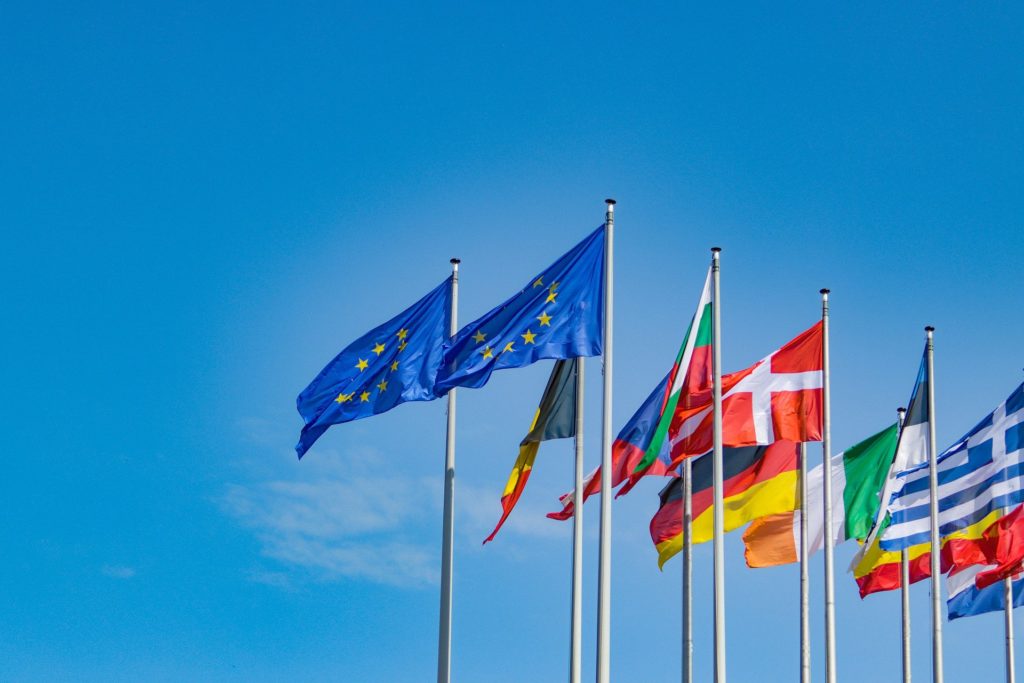
European Union countries

EU membership influences the economic development of Poland through EU regulations, foreign trade, transfers from the EU budget, foreign direct investment, and free movement of people.


Becoming a Polish citizen by right of blood

Polish citizenship is passed by “the right of blood”. If one of the parents holds Polish citizenship (or is a person of Polish descent), it is passed to the child irrespective of whether the child was born in Poland or abroad.
It also applies to people born in countries with the “right of soil” e.g. USA. If you were born in the USA to at least one Polish parent (or a parent of Polish descent – to your Polish grandparents), you can claim Polish citizenship despite the fact you acquired US citizenship at your birth.

The benefits of Polish Citizenship

Once you receive your Polish citizenship, you not only become a Polish citizen but in addition to that, you also become a European citizen. Why do we mention it? Being able to call yourself a European citizen and having easy access to the EU is the major benefit of Polish citizenship.

Polish nationality vs Polish citizenship – what is the difference?

The notion of Polish citizenship has no statutory definition. In doctrine it is defined as a certain kind of legal bond between a natural person and a state, which consists in the person’s belonging to that state. It is expressed by the state providing rights for citizens and presenting them with obligations, which exist to indicate the ways of acquiring and retaining citizenship and the related rights or lack thereof.